

Pulpo á feira
The traditional recipe, the way Galicia's pulpeiras make it
Traditional recipe
Four ingredients and a lot of craft
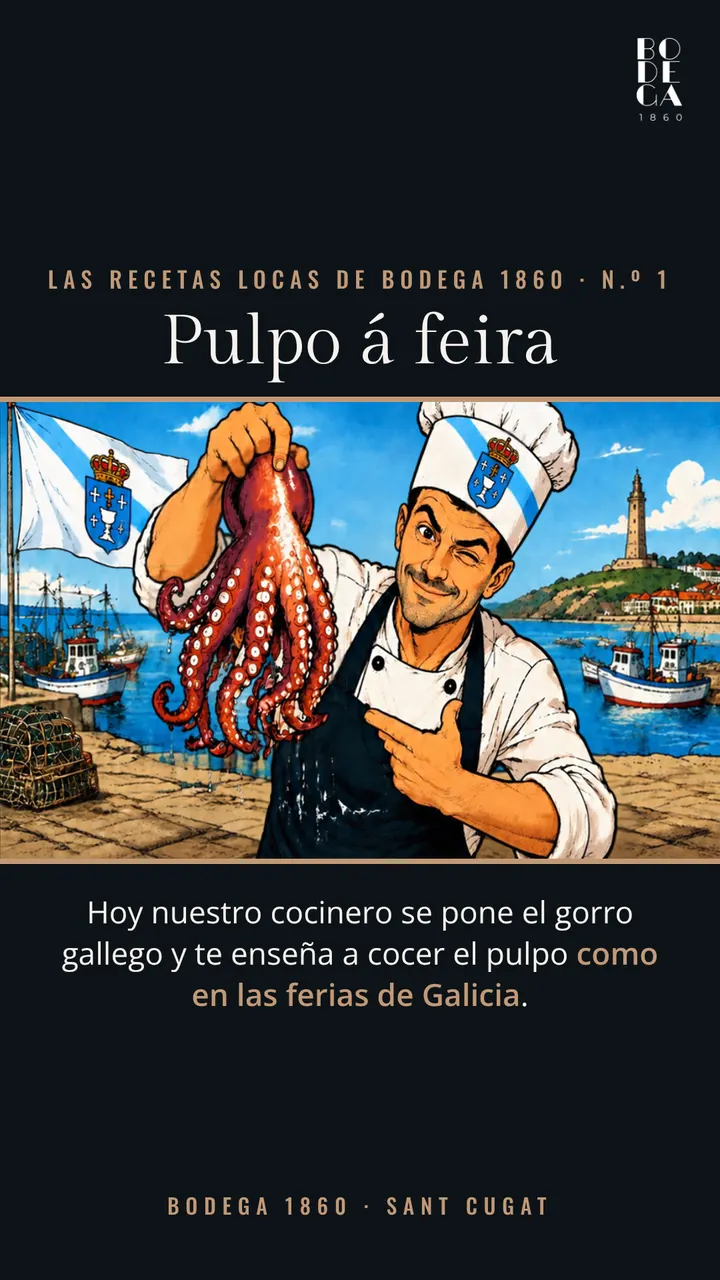
Pulpo á feira is the octopus of Galicia's fairs and pilgrimages: cooked in a copper pot, cut with scissors and served on a wooden plate with coarse salt, paprika and olive oil. That is how the pulpeiras of O Carballiño make it, where the Festa do Polbo is held every August.
It comes without potatoes: when it is served with boiled potatoes (cachelos), it is usually called pulpo a la gallega. If you want them, boil the potatoes in the octopus water, which gives them colour and flavour.
Ingredients (serves 4)
- 1 octopus of 2 to 3 kg (the best size), frozen or already thawed
- Plenty of water, no salt
- Coarse salt
- Sweet and hot paprika (ideally from La Vera)
- Extra virgin olive oil
- Wooden plate and toothpicks (a must)
Step by step
Freeze it first
The cold breaks down the fibres and keeps the octopus tender. In the old days it was beaten against a stone for the same reason. Thaw it in the fridge overnight.
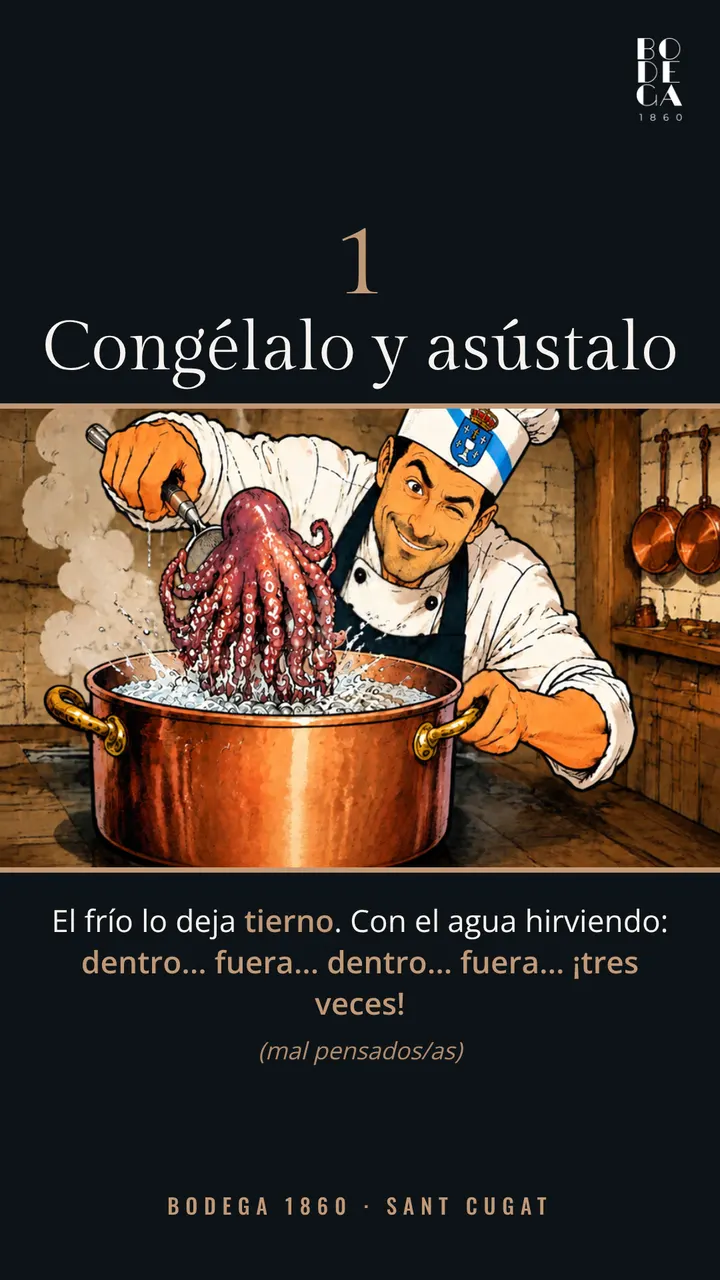
Dip it three times
With the water at a rolling boil, hold the octopus by the head, dip it in for a few seconds and lift it out. Do it three times: the tentacles curl and the skin stays whole.
Cook it with the lid on
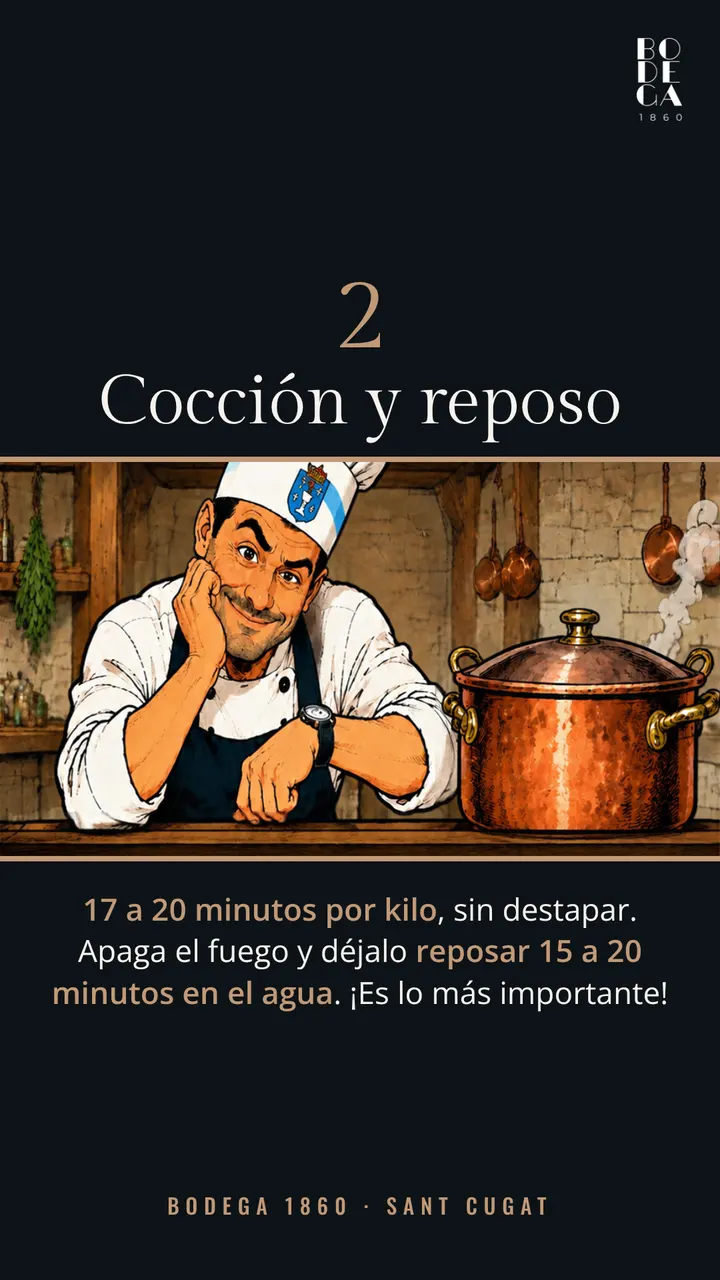
Leave it in the boiling water for about 17 to 20 minutes per kilo, without lifting the lid. To check, pierce the thick part of a tentacle: it should go in without resistance.
Let it rest in the water
This is the key step: turn off the heat and leave it in the water for 15 to 20 minutes. It stays tender and the skin stays in place. No need to let it cool: lift it out and cut it straight away.
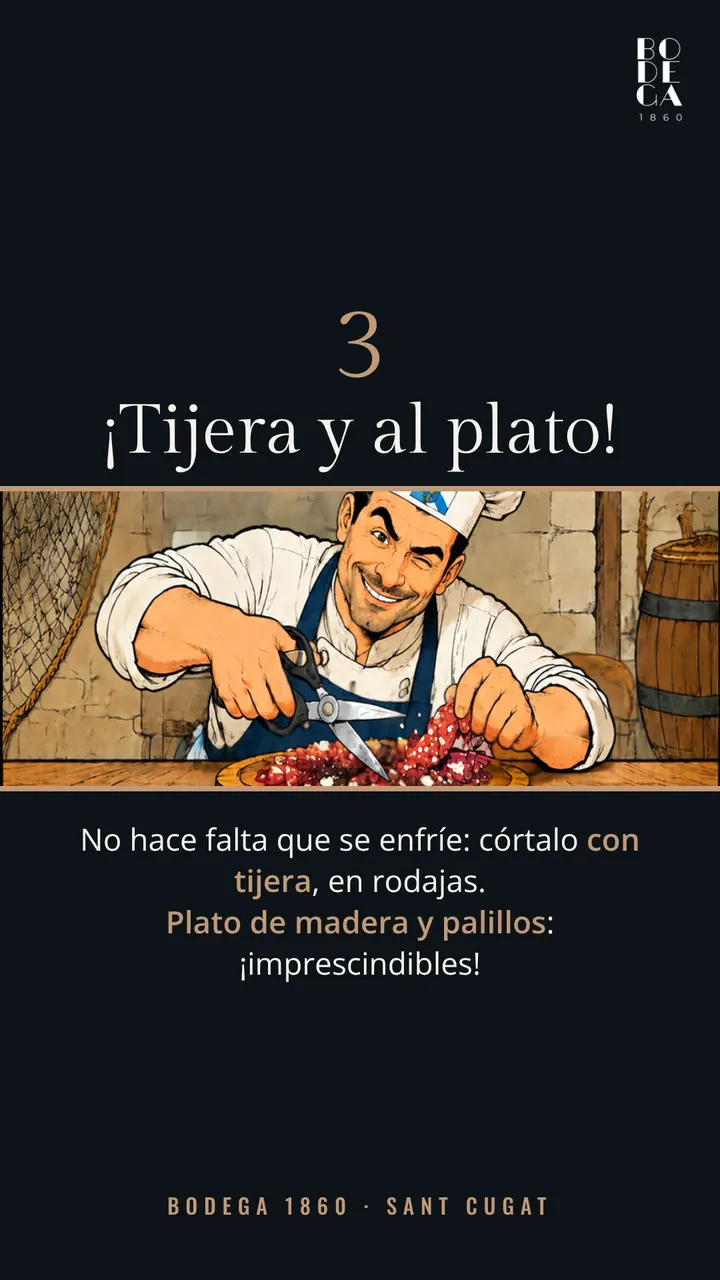
Cut it with scissors
Cut it into finger-thick slices onto a wooden plate, which keeps it warm, and serve it with toothpicks. Wooden plate and toothpicks are a must.
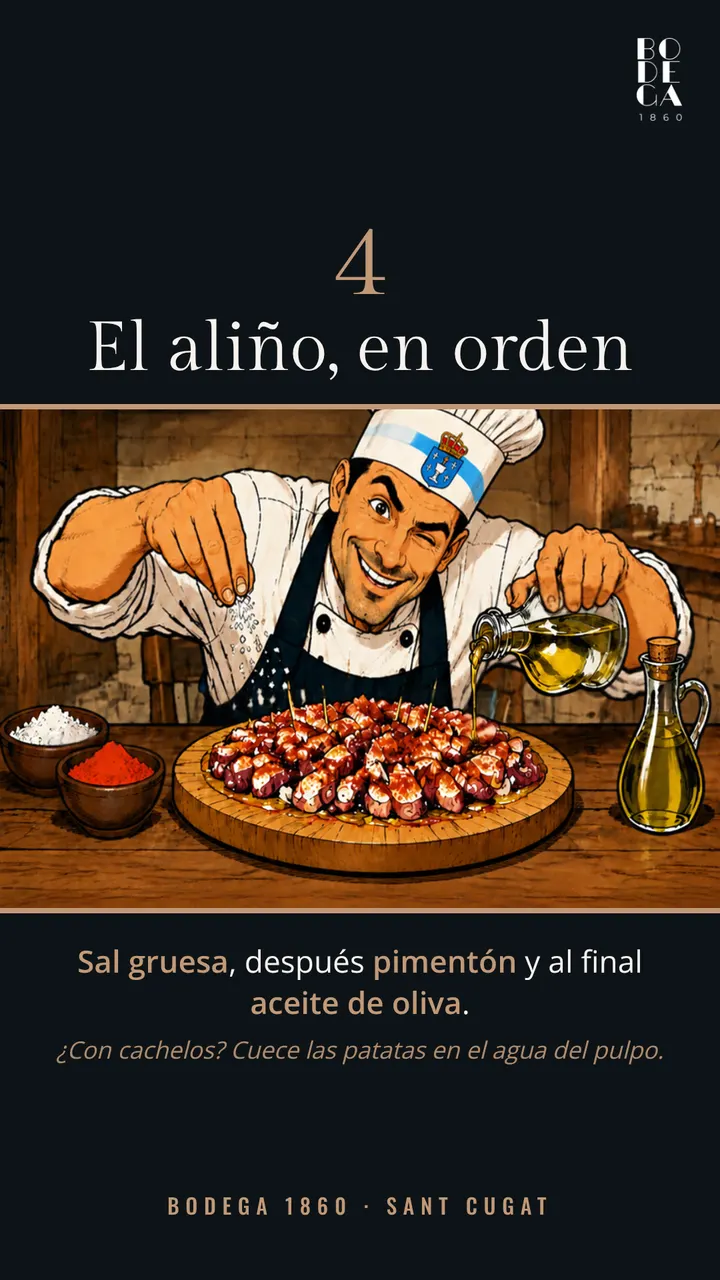
Dress it in order
First coarse salt, then paprika and finally the oil. If the oil goes first, the salt and paprika won't stick.
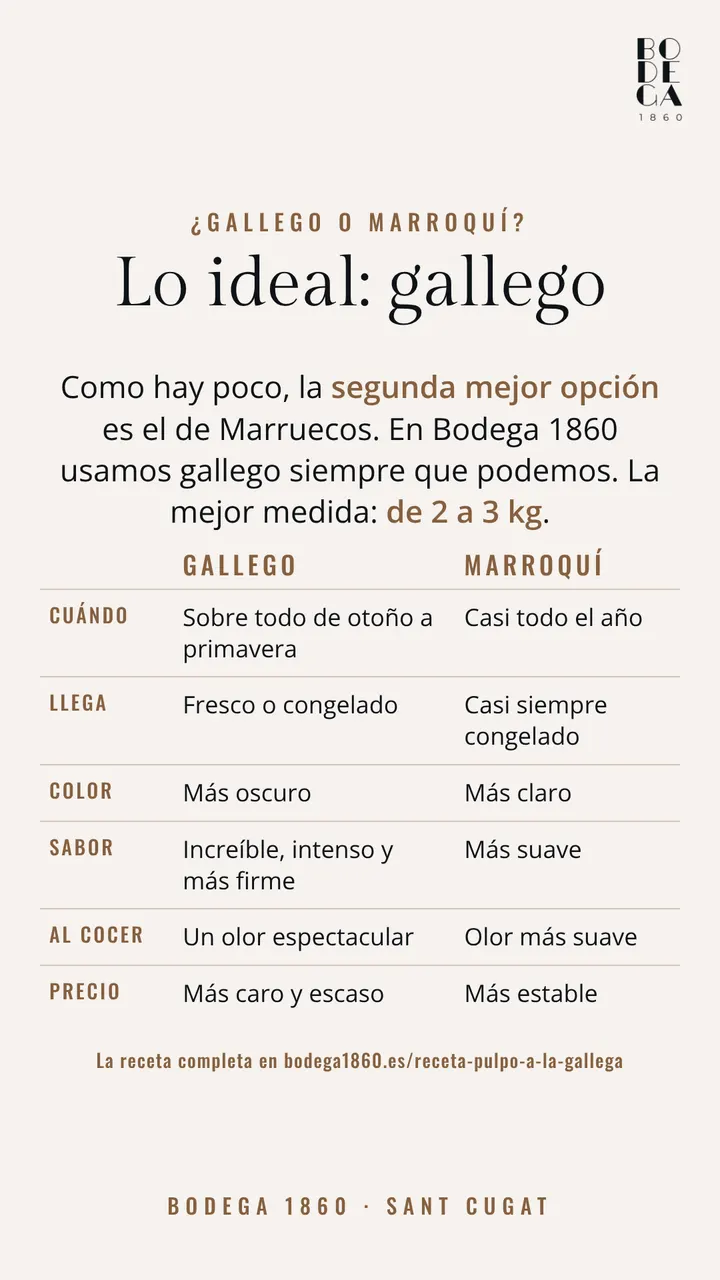
Galician or Moroccan octopus
It is the same animal, the common octopus (Octopus vulgaris), from different seas. Today most of the octopus sold in Spain, Galicia included, comes from the Atlantic coast of Africa.
| Galician | Moroccan | |
|---|---|---|
| Where it comes from | Galician rías and coast, small-scale fishing | Atlantic coast of Morocco |
| When it is available | Mostly autumn to spring, with a fishing closure | Almost all year round |
| How it arrives | Fresh or frozen | Almost always frozen |
| Colour | Darker | Lighter |
| Flavour and texture | Incredible, intense flavour, firmer flesh | Milder flavour, softer flesh |
| When cooking | A spectacular smell as it cooks | Holds up well when cooked |
| Price | Pricier and scarce | More stable price |
And ours?
Galician octopus is ideal, and at Bodega 1860 we use it whenever we can get it. As there is little of it, the second-best option is Moroccan octopus, and we work with that too. We cook it the same way, following the traditional recipe.
Shall we cook it for you?
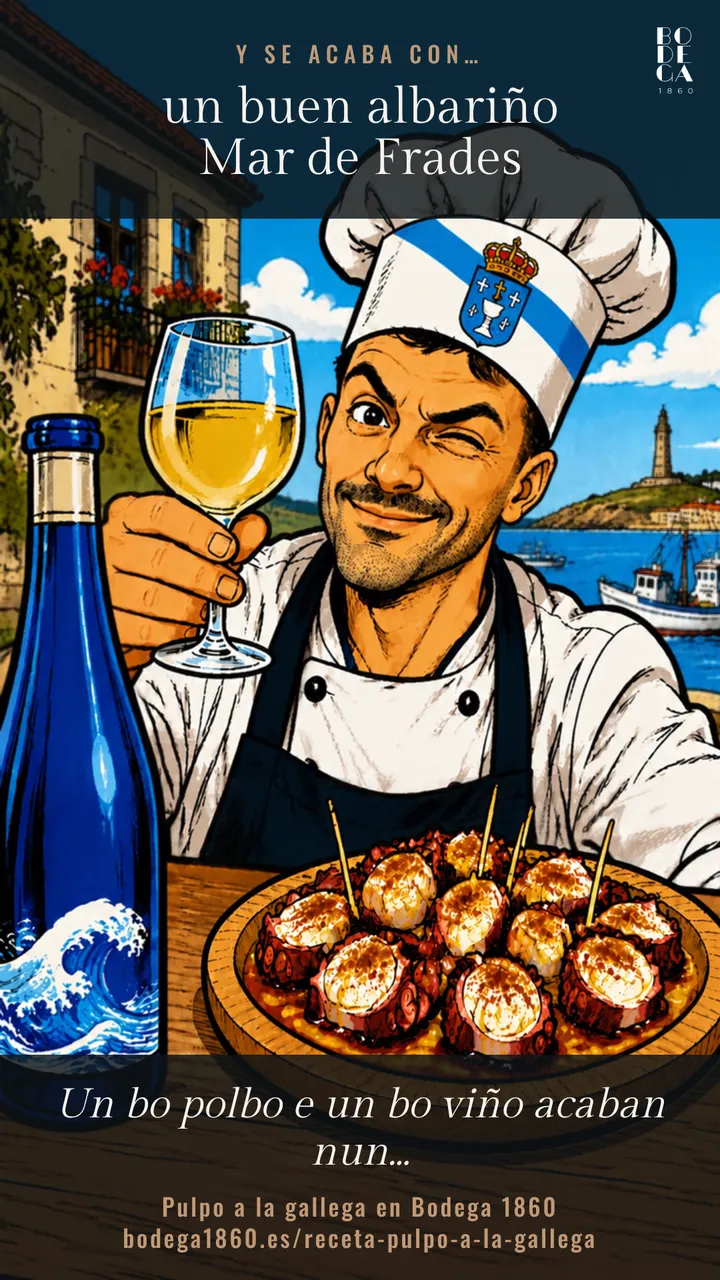
Galician-style octopus is on our menu, on Plaça Octavià, opposite the Monastery of Sant Cugat. And to go with it, a good Mar de Frades Albariño.
Based on the traditional recipe of the Galician fairs.